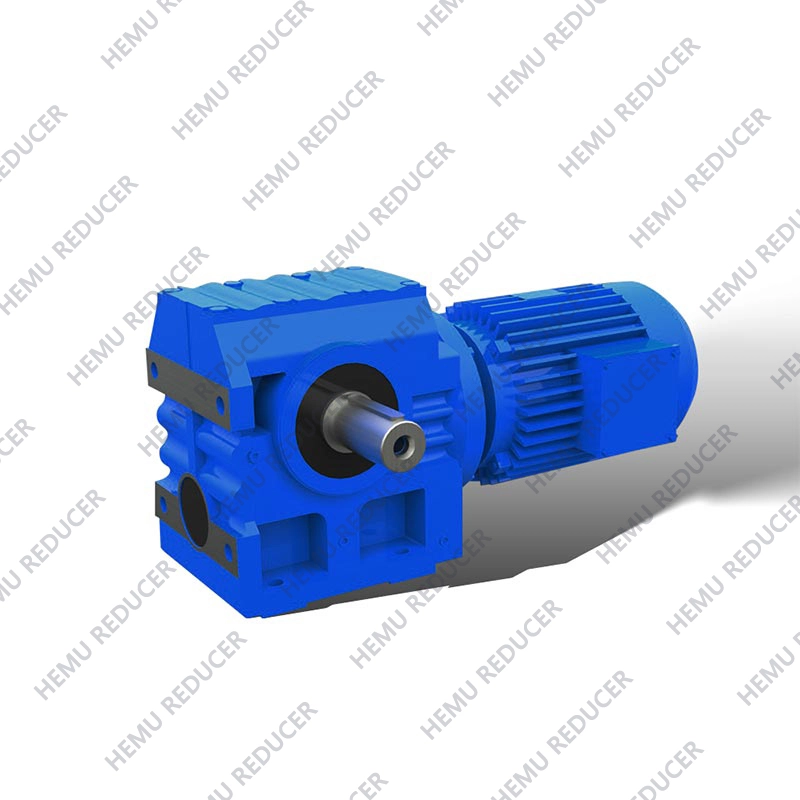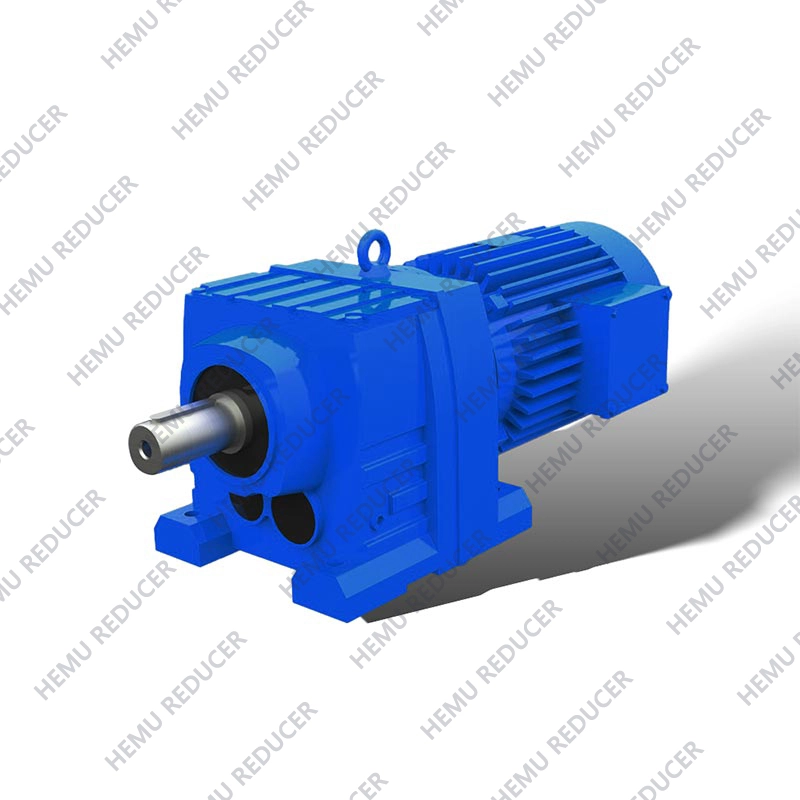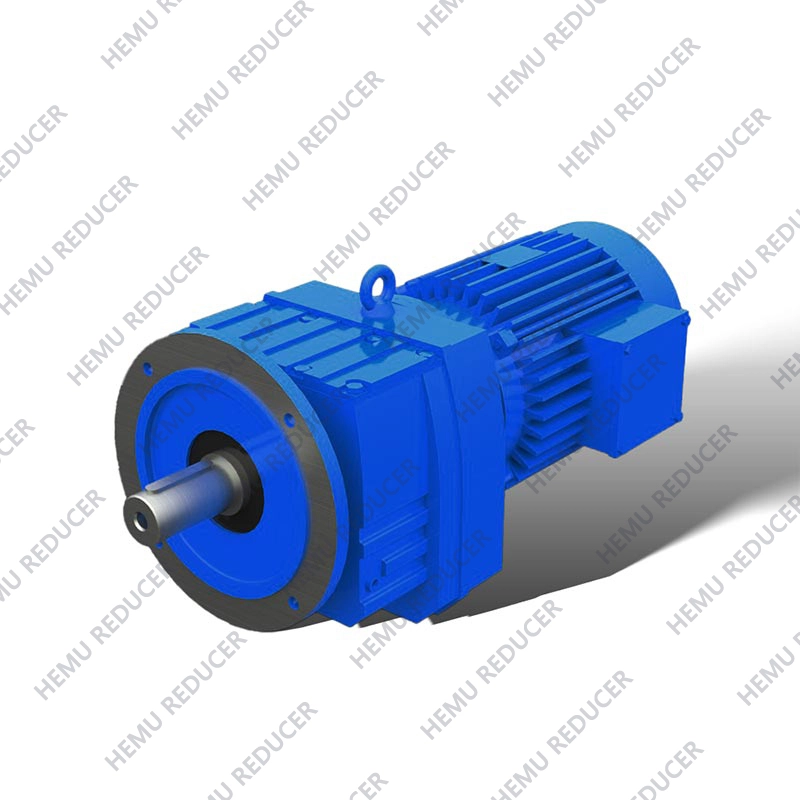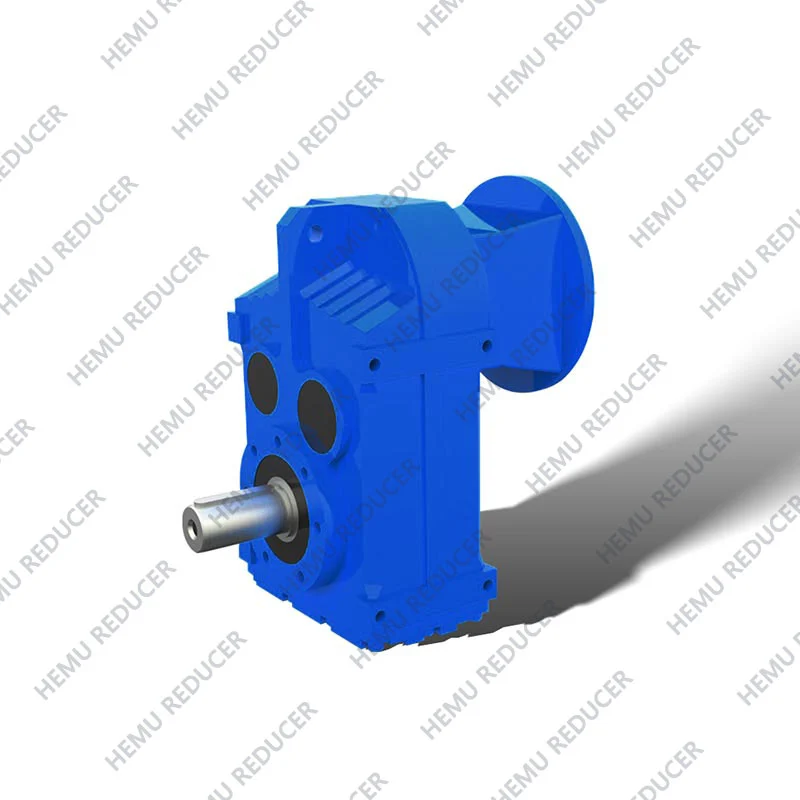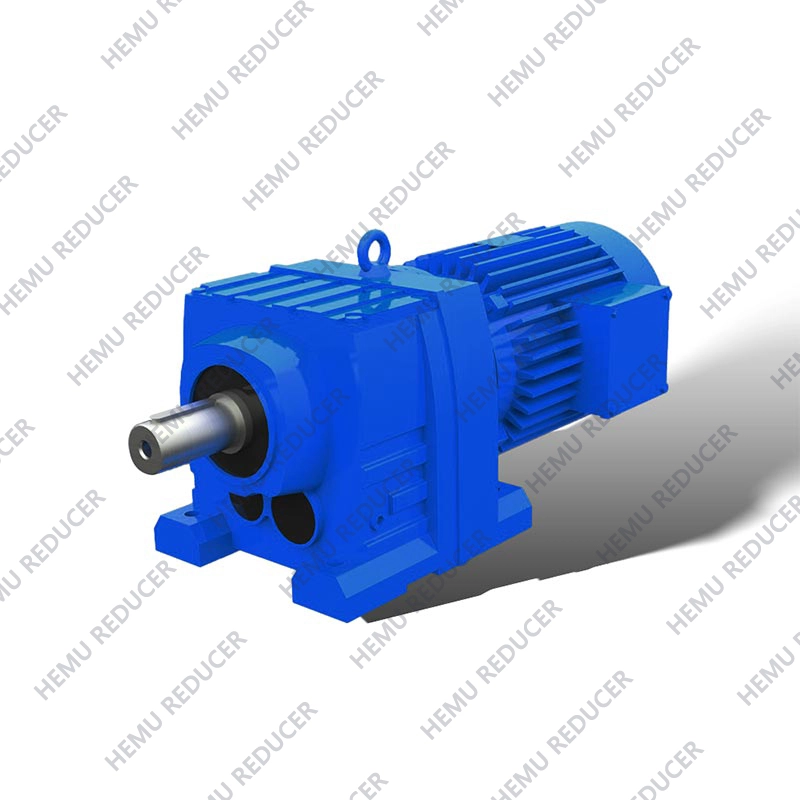

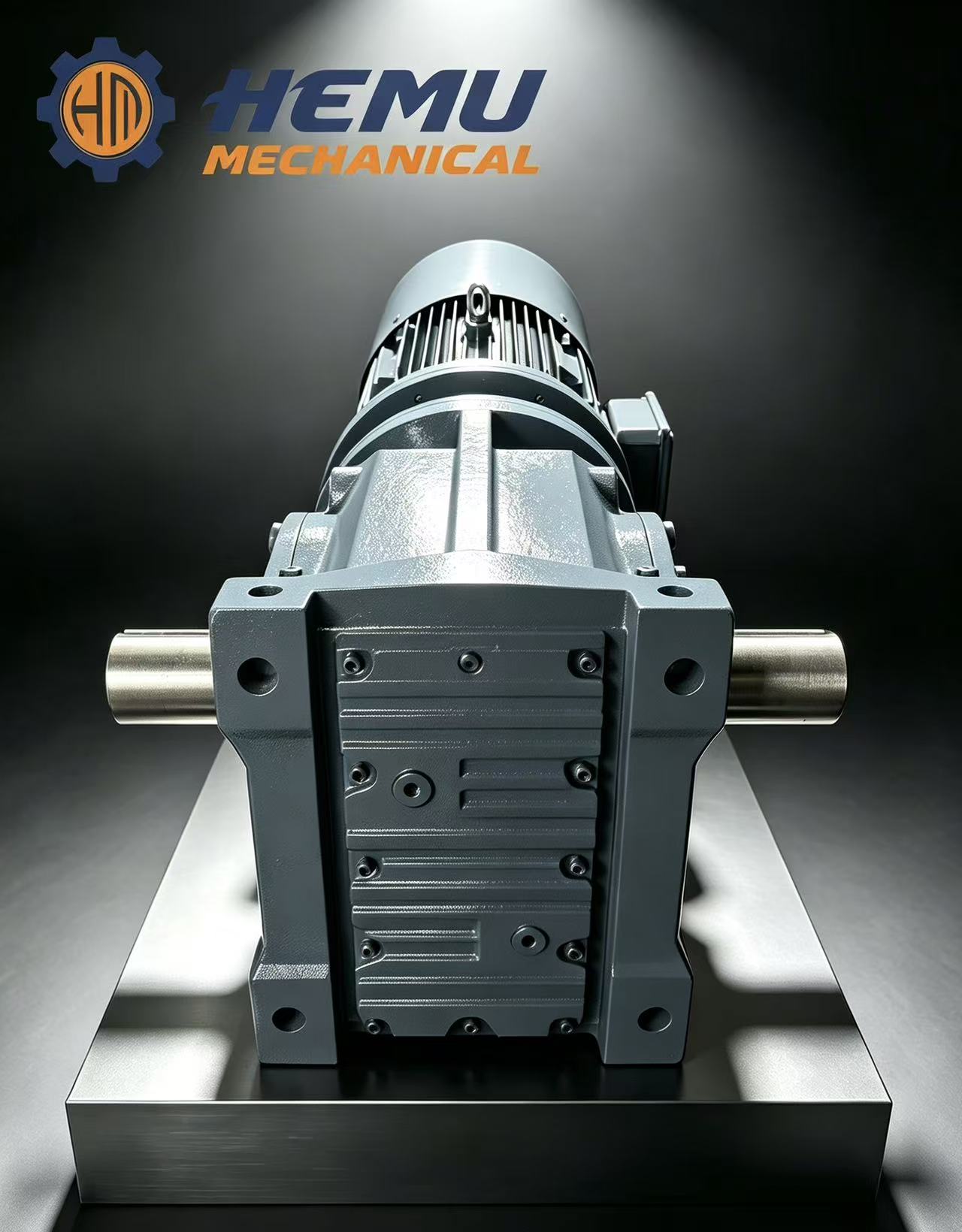
Industrial drive systems demand gearmotors that combine high torque output, compact right-angle geometry, and reliable performance under continuous load. The HK Series Helical Bevel Gear Motor addresses these requirements through a hardened helical-bevel gear train, cast-iron housing construction, and a power range extending from 0.18 kW to 200 kW. This article examines the technical characteristics, gear material specifications, industry applications, and selection criteria that define this gearmotor family.
▸ Table of Contents — Click any topic to jump directly
- What Is an HK Series Helical Bevel Gear Motor?
- The Helical-Bevel Gear Train Explained
- Housing and Gear Material Specifications
- Performance Range and Torque Output
- Applications Across Heavy Industries
- Selection Criteria for System Designers
- Technical Specifications Reference
- Frequently Asked Questions
What Is an HK Series Helical Bevel Gear Motor?
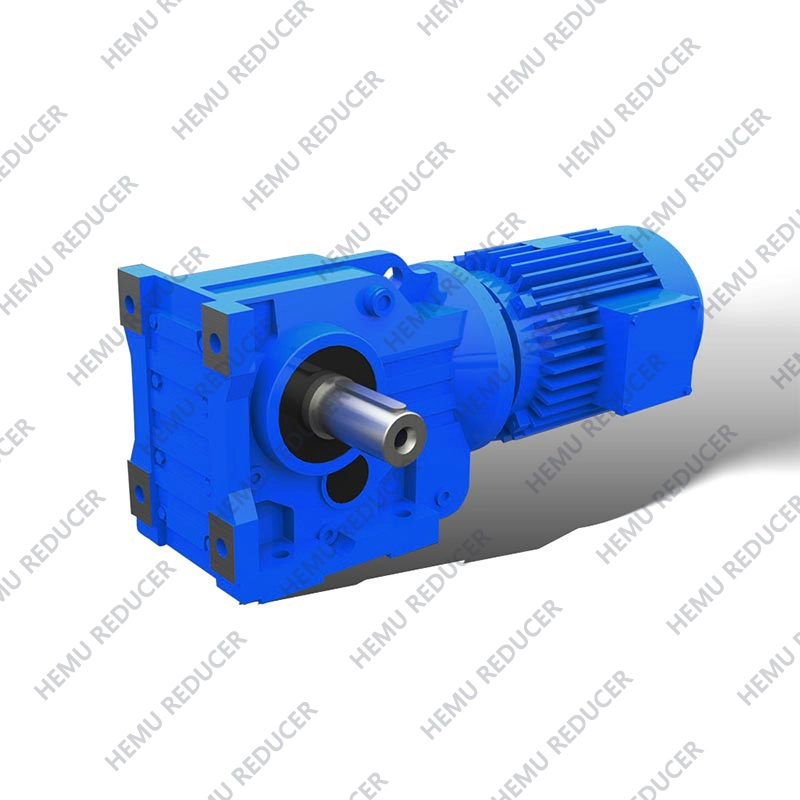
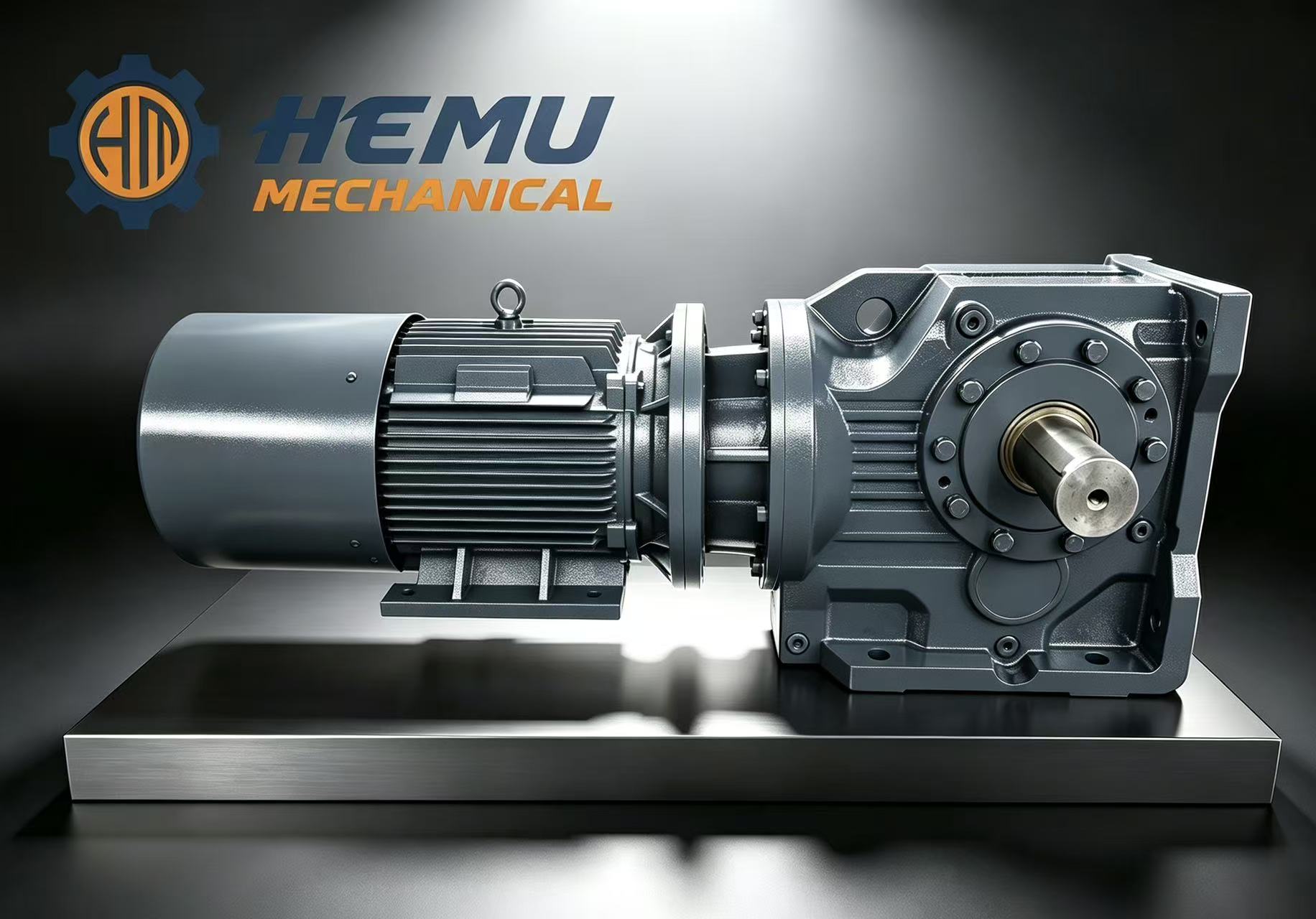
An HK series gearmotor is a right-angle drive unit that combines a helical gear stage with a bevel gear stage in a single housing. The helical stage handles the initial speed reduction with smooth, quiet operation, while the bevel stage redirects the output shaft by 90 degrees. This configuration allows the motor to be mounted parallel to the driven equipment rather than inline with it, which is critical in installations where longitudinal space is constrained.
The HK Series Helical Bevel Gear Motor is designed for continuous-duty industrial applications where reliability and torque density are the primary selection criteria. The gearmotor family spans model sizes from HK37 through HK187, with input power ratings from 0.18 kW up to 200 kW and output torque ranging from 200 N·m to 50,000 N·m depending on configuration.
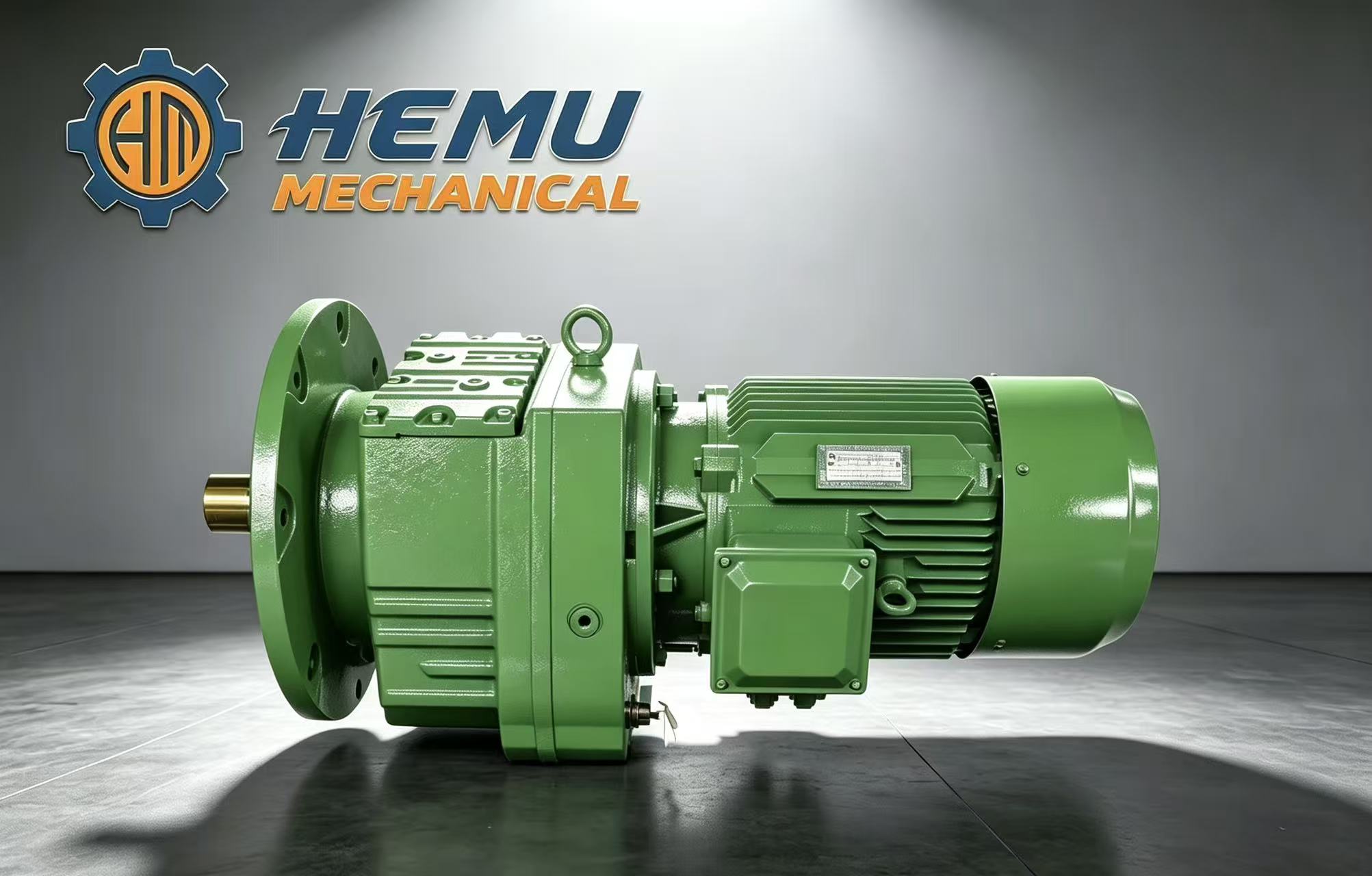
Right-Angle Configuration
The bevel gear stage redirects output by 90 degrees, enabling space-saving mounting arrangements in tight installation envelopes.
Helical-Bevel Combination
The helical stage provides smooth, quiet speed reduction, while the bevel stage delivers the right-angle output with high torque capacity.
The Helical-Bevel Gear Train Explained
The gear train is the defining feature of any gearmotor, and in the HK series it consists of two distinct stages operating in series. The first stage uses helical gears, whose teeth are cut at an angle rather than straight across the gear face. This angled tooth geometry produces gradual engagement as the teeth mesh, which reduces noise and vibration compared to spur gears and allows the gears to carry higher loads for a given size.
The second stage uses bevel gears with spiral-cut teeth. The spiral angle provides the same gradual engagement benefit as the helical stage, but in a configuration that transmits motion through a 90-degree change in axis direction. The combination of helical and bevel stages in a single unit delivers the smoothness of a helical drive with the mounting flexibility of a right-angle gearbox.
Gear ratios for the HK series range from 5.36:1 to approximately 180:1 in standard configurations, depending on model size and the number of gear stages selected. This broad ratio range allows the same gearmotor family to serve applications requiring output speeds from a few revolutions per minute up to several hundred revolutions per minute, all driven from standard four-pole or six-pole AC motors.
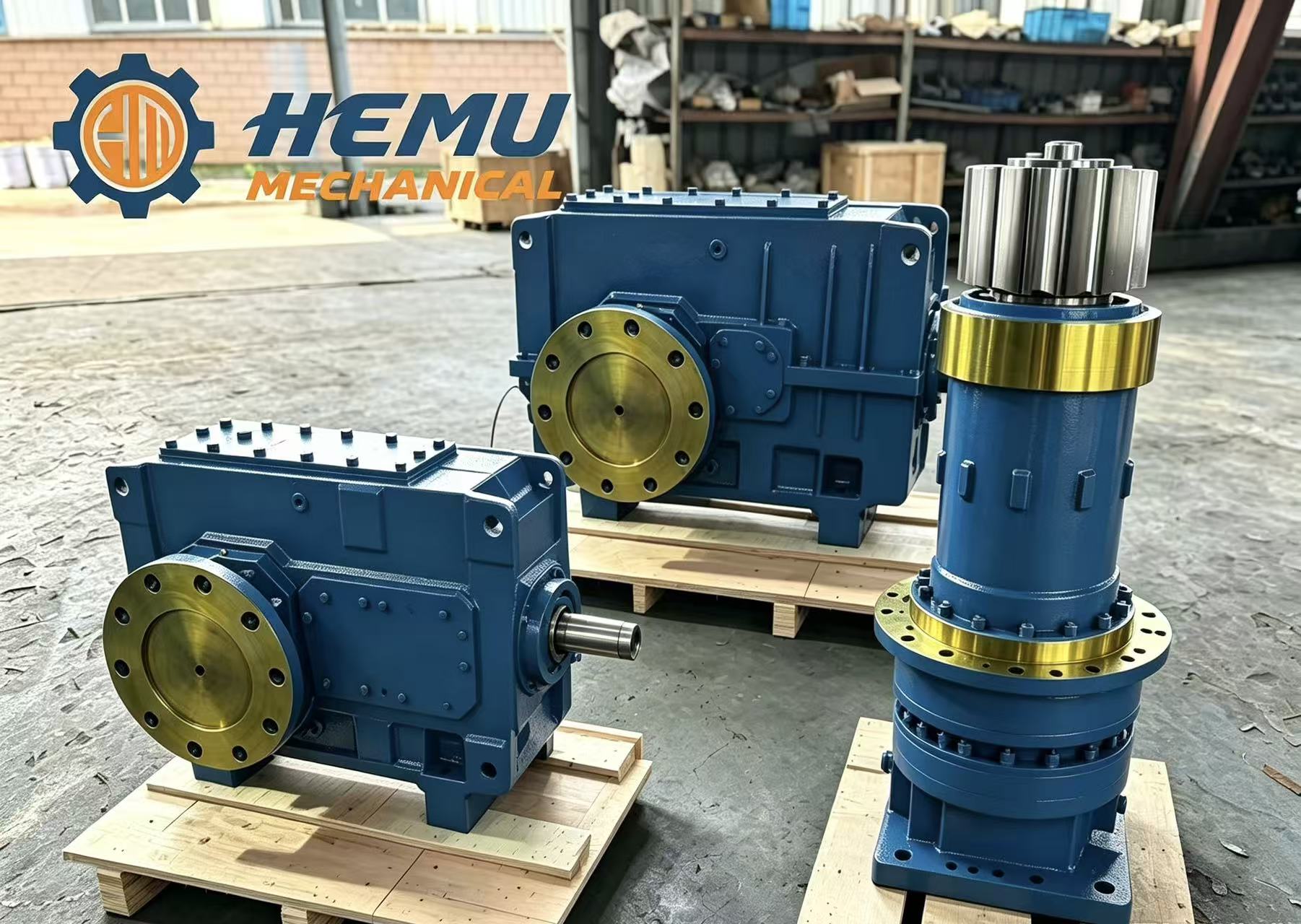
Housing and Gear Material Specifications
Material selection determines how a gearmotor performs under load, how long it lasts, and how it handles the thermal and mechanical stresses of continuous operation. The HK series specifies materials that are appropriate for heavy-duty industrial service.
| Component | Material | Hardness / Specification | Purpose |
|---|---|---|---|
| Housing | Cast iron | HBS190-240 | Structural rigidity, heat dissipation |
| Gears | 20CrMnTi alloy steel | Surface HRC58-62, core HRC33-40 | Wear resistance with tough core |
| Input/Output Shafts | 42CrMo alloy steel | — | Torsional strength, fatigue resistance |
| Shaft Diameters | φ25k6 to φ190m6 | — | Progressive sizing across range |
The 20CrMnTi alloy steel used for the gears is a carburising-grade material that develops a hard, wear-resistant surface while retaining a softer, tougher core. This combination allows the gear teeth to resist surface fatigue and pitting under high contact stresses while still absorbing shock loads without fracturing. The case depth and hardness profile are controlled through the heat treatment process to achieve the specified surface hardness of HRC58-62 and core hardness of HRC33-40.
The cast-iron housing provides the structural stiffness needed to maintain precise gear alignment under load. Any deflection in the housing would allow the gear mesh to shift, which accelerates wear and increases noise. Cast iron also dissipates heat more effectively than lighter materials, which helps maintain stable oil temperatures during continuous operation.
The 42CrMo alloy steel specified for input and output shafts is a chromium-molybdenum grade known for high tensile strength and fatigue resistance. This is particularly important for output shafts that carry high torsional loads and may also experience bending moments from belt or chain drives mounted directly on the shaft.
Performance Range and Torque Output
The HK series is available in seven primary model sizes, each optimised for a specific range of torque and power requirements. The table below summarises the key performance parameters across the range.
| Model Size | Input Power Range | Output Torque Range | Gear Ratio Range |
|---|---|---|---|
| HK37 | 0.18 – 3.0 kW | 200 – 220 N·m | 5.36 – 106.38 |
| HK47 | 0.18 – 5.5 kW | 220 – 400 N·m | 5.36 – 131.87 |
| HK57 | 0.55 – 11 kW | 400 – 600 N·m | 5.36 – 180.78 |
| HK67 | 1.1 – 22 kW | 600 – 820 N·m | 7.28 – 201.41 |
| HK77 | 2.2 – 45 kW | 820 – 1,500 N·m | 7.28 – 217.41 |
| HK87 | 5.5 – 90 kW | 1,500 – 3,000 N·m | 7.56 – 229.71 |
| HK97 – HK187 | 11 – 200 kW | 3,000 – 50,000 N·m | 10.24 – 180.78 |
The progression from HK37 to HK187 represents roughly a 250-fold increase in maximum output torque. This scalability means that a single gearmotor family can serve applications ranging from small conveyor drives to heavy-duty crushers and mill drives, which simplifies spare parts management and maintenance training for facilities that operate multiple drive systems.
Efficiency and Thermal Behaviour
The helical-bevel gear train achieves high mechanical efficiency because the gradual tooth engagement of both stages minimises sliding friction compared to worm gears or simple spur gear arrangements. This efficiency translates directly into lower heat generation within the gearbox and reduced power consumption at the motor, which is particularly relevant for continuous-duty applications where the gearmotor runs for thousands of hours per year.
Applications Across Heavy Industries
Right-angle helical-bevel gearmotors are used wherever a driven machine requires high torque at low speed and the motor must be mounted perpendicular to the output shaft. The following applications represent the primary industrial sectors where the HK series delivers consistent value.
- Belt conveyors and bulk material handling systems requiring reliable continuous operation
- Screw conveyors and feeders where the right-angle configuration fits the equipment envelope
- Mixers and agitators operating at low speed with high torque demands
- Crane travel and hoist mechanisms requiring controlled acceleration and braking
- Packaging machinery where precise speed reduction and quiet operation are priorities
- Water treatment equipment including clarifiers, thickeners, and aerators
- Mining and cement processing equipment subjected to abrasive and dusty environments
- Food and beverage processing lines where washdown compatibility is essential
The dust and moisture resistance of the cast-iron housing, combined with the sealed bearing arrangements, allows the HK series to operate in environments that would quickly degrade lighter-duty gearmotors. In food processing applications, the smooth exterior surfaces and absence of external oil lines simplify cleaning and reduce the risk of contamination accumulation.
Where the HK Series Is Not the Right Choice
The right-angle configuration and cast-iron construction make the HK series less suitable for applications where minimising weight is the dominant requirement, such as mobile equipment or portable machinery. In those cases, an aluminium-housing gearmotor or a different gear train configuration would be more appropriate. The HK series is optimised for stationary industrial installations where torque capacity, durability, and service life take priority over weight reduction.
Selection Criteria for System Designers
Selecting the correct gearmotor for an application involves matching several interrelated parameters. The following sequence reflects the typical decision path used by drive system designers.
- Determine the required output torque at the driven shaft, including any starting or shock loads that exceed the steady-state running torque.
- Establish the required output speed and calculate the overall gear ratio needed from the available motor speed.
- Confirm the input power rating matches the available motor, accounting for service factor requirements specific to the application.
- Check the radial and axial load capacities of the output shaft against any overhung loads from pulleys, sprockets, or couplings.
- Verify the mounting orientation and available space envelope accommodate the right-angle configuration.
- Review the environmental conditions including ambient temperature, dust, moisture, and washdown exposure to confirm the standard enclosure rating is appropriate.
Overhung load capacity is often the limiting factor in gearmotor selection, particularly when a pulley or sprocket is mounted directly on the output shaft. The permissible overhung load decreases as the distance from the shaft shoulder increases, and this relationship must be checked against the actual load position in the application.
Technical Specifications Reference
| Parameter | Specification | Notes |
|---|---|---|
| Model Range | HK37 – HK187 | Seven primary sizes |
| Input Power | 0.18 – 200 kW | Dependent on model and motor selection |
| Output Torque | 200 – 50,000 N·m | Maximum across full range |
| Gear Ratio | 5.36:1 – 229.71:1 | Two-stage and three-stage options |
| Housing Material | Cast iron | HBS190-240 hardness |
| Gear Material | 20CrMnTi alloy steel | Surface HRC58-62, core HRC33-40 |
| Shaft Material | 42CrMo alloy steel | Input and output shafts |
| Output Shaft Diameter | φ25k6 – φ190m6 | Progressive across model range |
| Mounting Position | Right-angle (90-degree output) | Various orientation options |
| Typical Industries | Conveying, mixing, lifting, processing | Continuous-duty industrial |
These reference values serve as a specification baseline. Final selection should account for the specific service factor, environmental conditions, and load characteristics of the application.
Frequently Asked Questions
What is the difference between a helical gear motor and a helical-bevel gear motor?
A helical gear motor uses only helical gears, which means the input and output shafts are parallel. A helical-bevel gear motor adds a bevel gear stage that redirects the output by 90 degrees, allowing the motor to be mounted perpendicular to the driven shaft. The HK series uses this helical-bevel configuration for space-saving right-angle installations.
What gear materials are used in the HK series and why?
The gears are made from 20CrMnTi alloy steel, a carburising-grade material that develops a hard surface (HRC58-62) for wear resistance while maintaining a tough core (HRC33-40) to absorb shock loads without fracturing. The shafts use 42CrMo alloy steel for high torsional strength and fatigue resistance.
What is the maximum output torque available in the HK series?
The largest models in the range deliver up to 50,000 N·m of output torque. The smallest model, HK37, provides 200 N·m. The full range spans from 200 N·m to 50,000 N·m, allowing a single gearmotor family to serve applications from small conveyor drives to heavy industrial machinery.
Can the HK series be used in food processing environments?
Yes. The cast-iron housing and sealed construction are compatible with washdown environments when specified with appropriate protection. The smooth exterior surfaces simplify cleaning, and the absence of external oil lines reduces contamination risk. Specific enclosure ratings should be confirmed for the particular washdown regime used in the facility.
How do I determine the correct gear ratio for my application?
Divide the motor speed by the required output speed to calculate the needed ratio. For example, a 1450 rpm motor driving an output at 15 rpm requires a ratio of approximately 96:1. Confirm that the selected ratio is available within the model size that also satisfies the torque and power requirements, as ratio options vary by model.
What mounting positions are available for the HK series?
The right-angle configuration allows the gearmotor to be mounted in multiple orientations, with the motor positioned horizontally, vertically, or at an angle relative to the output shaft. The specific mounting position affects lubrication distribution, so the intended orientation should be confirmed during selection to ensure proper oil flow to all bearings and gear meshes.
For drive system designers and maintenance engineers, the HK Series Helical Bevel Gear Motor provides a scalable torque solution with the material specifications and construction quality required for continuous-duty industrial service. Confirming torque requirements, gear ratio, mounting orientation, and environmental conditions before selection ensures the gearmotor performs reliably across its intended service life.
Wenzhou Hemu Mechanical Equipment Co., Ltd. manufactures helical bevel gearmotors and industrial gear units from its production facilities, supplying drive solutions to conveying, mixing, lifting, and processing industries worldwide.